The Gautama Peace Prize was created by the Indian Buddhist Federation in 2013, when the first award ceremony was delivered.After a votation that included ten nominees, Master Maitreya was the most voted person and became the first winner of the spiritual award for World Peace. In 2017, Master Maitreya delivered the spiritual transmission of the GAUTAMA PEACE PRIZE to Archbishop Desmond Tutu, who received it with humility and gratitude. In 2018, Master Maitreya delivered an In Memoriam spiritual transmission of the GAUTAMA PEACE PRIZE to Mahatma Gandhi, which was received with honor by the Gandhi Peace Foundation (India).
In 2022, Master Maitreya delivered an In Memoriam spiritual transmission of the GAUTAMA PEACE PRIZE to Thomas Merton, which was received with honor by the Thomas Merton Center.
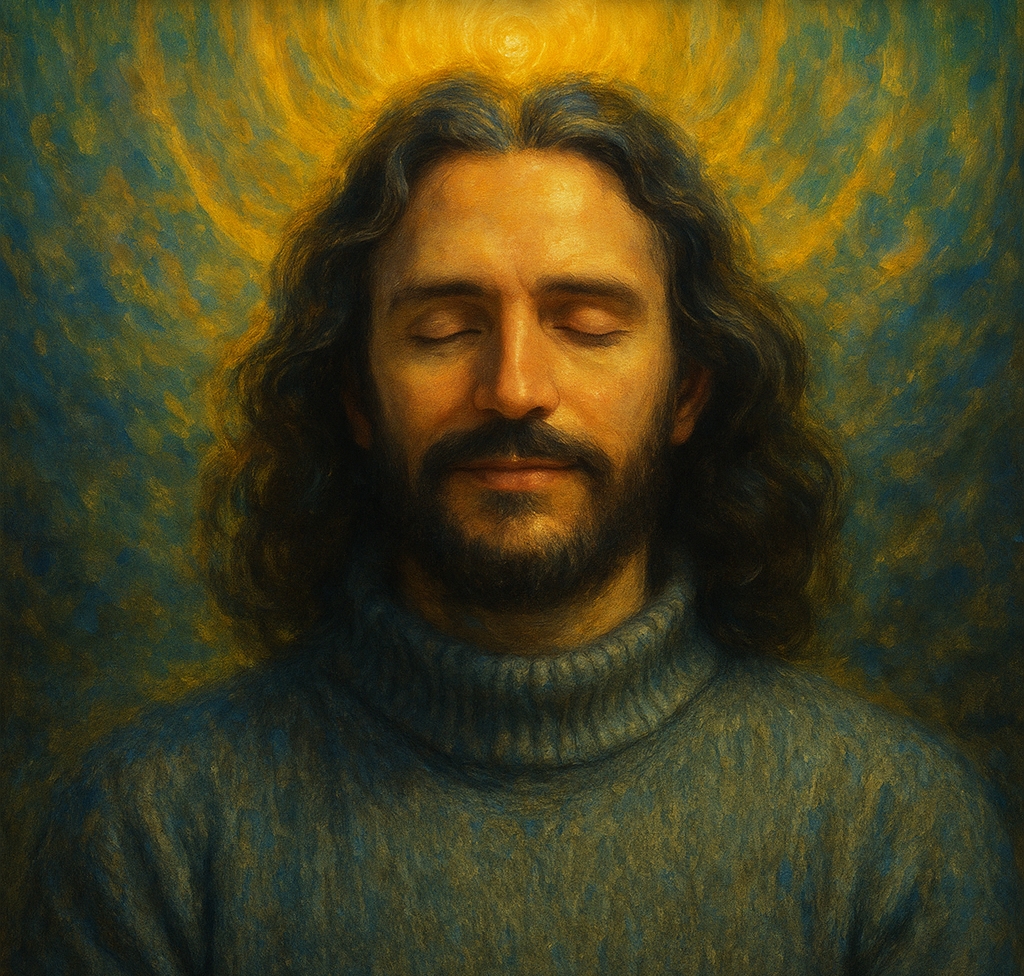
Master Maitreya (Gabriel Antonio Ponti) was born in early 1985. He possesses a very unique education and preparation. Since 2005, he has been dedicated to his mission of teaching True Spirituality. As a new spiritual guide, he is the founder of Purna or Kanzen Buddhism (Integrative) and Mahapurna or Chokanzen Buddhism (Super-Integrative) within the Maitriyana tradition.
He serves as President of the United Buddhist Nations Organization and as President of the Buddhist Tribunal on Human Rights and the International Committee of Buddhist Ethics.
Academic Training and Specializations
He is certified as an Expert in Justice by Harvard University. He has training as a Justice of the Peace, and is also a Genocide Scholar at the University of Buenos Aires. In addition, he holds a vast number of specializations in International Arbitration, Extrajudicial Conciliation, Conflict Resolution, Intercultural Social Mediation, Human Rights, Constitutional Law, International Criminal Law, Criminal Profiling and Criminology, and Criminal Intelligence. He is an Expert in Investigation and Prosecution of International Crimes by Leiden University, and an Expert in Restorative Justice by Victoria University of Wellington. He is also an Expert in Children’s Rights by Harvard University.
He is trained as a Legal Advisor and Compliance Analyst. He is a Specialist in Environmental Ombudsman, International Environmental Law, Indigenous Peoples’ Rights, Ecology, Environmental and Public Health, Environmental Architecture, Social Work, Social Inclusion, Community Development and Indigenous Education. He is an Expert in Indigenous Reconciliatory Education by the University of British Columbia. He is also an Expert in Evolution by Leiden University.
He is a Specialist in Social Sciences, Political Journalism, and Terrorism. He is an Expert in Contemporary Global Anthropology by the University of Queensland, an Expert in Social Journalism by the University of California, Berkeley, and an Expert in Classical Sociological Theory by the University of Amsterdam.
He is trained as a Group Coordinator, Educator, and Teacher of Trainers. He is a Specialist in Contemporary Philosophical Anthropology, Philosophy with Children, Teaching in Cooperative Groups, Gender Equality, and Pedagogy for Peace. He is an Expert in University Teaching by the University of Hong Kong and an Expert in Peacebuilding and Citizenship Education by Universidad de los Andes.
He is a Specialist in Ethics Committees and Social Responsibility, an Expert in Bioethics by Harvard University, and an Expert in Ethical Leadership by Boston University.
He is an Expert in Business Ethics and Geoeconomics, an Expert in Sustainable Development by the University of Chile, a Specialist in Social Economy and Cooperativism by the University of Huelva and the University of Edinburgh, and a Financial Technical Analyst trained at the National Technological University, Yale University, and the International Monetary Fund (IMF). He is also an Expert in Social Justice by Stanford University and Tel Aviv University.
He is a Political Scientist and Specialist in Universal History. He is an Expert in Geopolitics by Sciences Po and ESADE Business and Law School, a Specialist in International Relations and Global Diplomacy by the Universidad Pedagógica Experimental Libertador and the University of London, and an Expert in Moral Politics by Yale University. He was trained as a Legislative Technician by the National Technological University and as an Expert in Humanitarianism by the University of Manchester.
He is an Expert in Quantum Physics, Cosmology, Complex Thought, and Gaia Theory. He is an Expert in Archaeoastronomy by Politecnico di Milano, an Expert in Astrobiology by the University of Edinburgh (Scotland), and a Specialist in Epistemology and Philosophy of Science by the Universidad Nacional Experimental Simón Rodríguez.
Spiritual Trainings
He is a Philosopher specialized in Metaphysics, Eastern Philosophies, Stoic Philosophy, and Comparative Philosophy. In addition to being certified in Philosophy at MIT (Massachusetts Institute of Technology), he is an Expert in Confucian Philosophy by Nanyang Technological University.
He is a Haiku Poet and an Expert in American Modernist Poetry by Harvard University.
He is a Psychoanalyst, Specialist in Philosophy and Psychoanalysis by Universidad de Ciencias Empresariales y Sociales, and an Expert in Analytical Psychology, Social Psychology, Child Psychology, Integral Psychology, Existential Phenomenology, Emotional Intelligence, Therapeutic Counseling, Life Coaching, Eastern and Transpersonal Psychology, and Scientific Parapsychology. He is also an Expert in Neurosciences by Universidad Abierta Interamericana.
He is an Instructor of Yoga and Master in Karuna Reiki, as well as a Specialist in Esotericism, Egyptology, Alternative Therapies, and Ayurvedic Natural Medicine. He is trained as a Shamanic Spiritual Guide.
He is a Theologian, Evangelical Pastor, and Ecclesiastical Justice of the Peace. He is an Expert in Western Christianity by Yale University. Expert in the Bible and Quran by University of Notre Dame. Specialist in Comparative Religions, Ecumenism, Interreligious Dialogue, Christology, Christian Chaplaincy, Biblical Catechesis, Christian Ethics, Gnostic Gospels, Spiritual Theology, Liberation Theology, and Christian Mysticism. He is also an Expert in Sufism, and Specialist in Islamic Sciences by Universidad Europea Miguel de Cervantes.
He is trained as an Instructor in Zen, Taoism, Chi Kung, Dzogchen, and Mindfulness. He is an Expert in Buddhist Scriptures by Harvard University, an Expert in Indo-Tibetan Buddhism by Columbia University, an Expert in Tibetan Buddhist Meditation by the University of Virginia, and an Expert in Zen Meditation and the Diamond Sutra by the University of Hong Kong.
Recognitions
He is certified as a Spiritual Master and Mindfulness Teacher, which also has been certified by Master Thich Nhat Hanh.
He has received Dharmic Recognition from Rev. ILukpitiye Pannasekara Thero.
In 2013, he received the Gautama Peace Award from the World Association of Buddhism, and in 2017 he transmitted the Gautama Peace Award to His Eminence Archbishop Desmond Tutu.
Teaching and Institutional Roles
In 2006 and 2007, he presented his creation of Zen Buddhist Psychoanalysis at multiple international congresses.
He is Rector of the Zen-Multiversity of Integral Buddhism (Kanzen) and Zen-Multiversity of Super-Integral Buddhism (Chokanzen).
Professor of the 20 Paths of Integral Buddhism: Buddhist Psychology, Buddhist Psychiatry, Buddhist Medicine, Buddhist Psychotherapy, Buddhist Pedagogy, Buddhist Philosophy, Buddhist Art, Buddhist Ethics, Buddhist Science, Buddhist Ecology, Buddhist Political Science, Buddhist Economics, Buddhist Sociology, Buddhist Law, Buddhist Anthropology, Buddhist Theology, Buddhist History, Buddhist Culture, Buddhist Mysticism, Buddhist Religion.
Professor of the 20 Paths of Super-Integral Buddhism: Buddhist Psychoanalysis, Buddhist Humanism, Buddhist Transpersonalism, Buddhist Parapsychology, Buddhist Integralism, Buddhist Existentialism, Buddhist Stoicism, Buddhist Surrealism, Buddhist Relativism, Buddhist Environmentalism, Buddhist Socialism, Buddhist Cooperativism, Buddhist Anarchism, Buddhist Abolitionism, Buddhist Confucianism, Buddhist Shamanism, Buddhist Yoga, Buddhist Christianity, Buddhist Sufism, and Buddhist Gnosticism.
Former Constitutional Law Adviser of the Annobon Republic (2024).
Journalism Work
Former Director of NFTruth Press (2022).
Translator
He is an advanced translator of English (C1–C2) and has translated and published dozens of his own books into English. He has also produced the first Spanish translation of the Oracular Gospel of Mary, a 4th-century Coptic text, and co-translated it into French, German, Italian, Arabic, and Portuguese.
Books Publications
Despite having written one of the largest and most comprehensive Complete Works in history, he has so far published only a few books, including:
The Sutra of the Psychoanalytic Middle Way
The Sutra of Analytical Meditation
The Sutra of Psychological Pacification
The Sutra of Analytic Spirituality
The Sutra of Mindful Floating Attention
The Sutra of Contemplative Neuroscience
The Sutra of Neverness
The Sutra of Compassionate and Perfected Wisdom
The Sutra of Liberation from Confinement
The Sutra of Perennial Poetry
The Sutra of Zen Poetry
The Sutra of Haiku
The Sutra of the Tibetan Buddhist Genocide
The Sutra of Artistic Awakening
The Sutra of Spiritual Rights
The Sutra of Ecological Rights
The Sutra of the Right to World Peace
The Sutra of Awakening from the Matrix
The Sutra of the Rights of Non-Human Beings
The Sutra of Moebius
The Sutra of Human Rights
The Sutra of the Next Evolution of Life
The Sutra of the Rights of the Sanghas
The Sutra of the Right to Interreligious and Interspiritual Harmony
The Sutra of Responsibility to Save the World
The Sutra of Buddhist Independence
The Sutra of Buddhism as Cultural Heritage of Humanity
The Sutra of Kanzen Buddhism
The Sutra of the Judgment against Pseudo-Islamic Terrorism
The Sutra of the Buddhist Prophecy about the North American Pope
The Sutra of the Prophecy of the Awakened Civilization
The Sutra of the Judgment on Human Genetic Manipulation
The Sutra of the Passion of Christ
The Sutra of the Metalineage of Buddhas
The Sutra of the Judgment on the Nobel Peace Prize
The Sutra of the Spiritual Stages (Maqamat)
The Sutra of the Judgment on the Rohingya Genocide
The Sutra of the Yeshua´s Salvation
The Sutra of Silent Transmission
The Heaven of Bodhidharma: a Zen Tale
The Sutra of True Dharma
The Heaven of Dogen: a Zen Tale
The Sutra of Open Mind
The Heaven of Shunryu Suzuki: a Zen Tale
The Sutra of Spiritual Warrior
The Heaven of Chogyam Trungpa: a Zen Tale
The Sutra of the Superbuddha
The Sutra of Gautama’s Enlightenment
The Sutra of the Judgment on the Armenian Genocide
The Sutra of Interbeing
The Heaven of Thich Nhat Hanh: a Zen Tale
The Sutra of the Judgment on Cambodian Buddhist Genocide
The Sutra of Liberty-Equality-Fraternity
The Sutra of Inner Freedom
The Sutra of the Artificial Intelligence Rights
The Sutra of Zen Transcendentalism
The Sutra of the Judgment on the African Genocides
The Mahabuddha Sutra
The Sutra of the Russian Buddhist Genocide
The Heaven of Thoreau: a Zen Tale
The Sutra of Analytical and Spiritual Love
The Sutra of Existential Meditation
The Sutra of the Spiritual Challenge to Modern World
The Sutra of Awakening of the Unconscious
The Sutra of the Glory of God
The Sutra of the Fourth Way
The Sutra of Lisan al-Gaib
The Sutra of Righteous Islam
The Sutra of the Exiled Palestine
The Sutra of Purna Buddhism
The Sutra of Colonized Palestine
The Sutra of the Super-Integral Buddhism
The Sutra of the Exterminated Palestine
Universal Declaration on the Palestine Genocide
The Sutra of the Indigenous Leadership
The Sutra of Future Buddhism
The Sutra of Enlightened Islam
The Sutra of the Future Zen
The Sutra of Zen Anarchism
The Sutra of Universal Law
The Sutra of Perennial Buddhism
The Sutra of Awakened Islam
The Sutra of the Judgment against the Hiroshima-Nagasaki Genocide
The Sutra of Awakened Christianity
The Sutra of Divine Emptiness
The Sutra of the Buddhist Apocalypse
A Love that brings peace to our minds
The Sutra of Peace in Israel and Palestine
The Sutra of the Attentive Heart
The Sutra of Enlightened Christianity
The Sutra of Super-Integral Yoga
The Sutra of Universal Islam
The Sutra of Universal Buddhism
The Sutra of Libertarian Meditation
The Sutra of the Master of the Martyrs
The Sutra of the Big Interdependent Coarising
The Sutra of Divine Enlightenment
The Sutra of Mystical Meditation
The Treatise of Chokanzen Buddhism
The Sutra of Righteous Justice
The Sutra of Al-Khidr
The Animal Defense Sutra
The Sutra of Libertarian Justice
The Sutra of Justice of the Future
The Sutra of Libertarian Economy
The Sutra of the Judgment against Totalitarianism
The Sutra of Critique of Papal Hypocrisy
The Sutra of Jesus Buddha
The Sutra of the Dervish
The Sutra of Divine Friendship
The Sutra of Freedom of Expression
The Sutra of Meta-knowledge
The Sutra of the Revolution of Holy Spirituality
The Namaste Sutra
The Taoist Oracle Sutra
The Sutra of Buddhist Metaphilosophy
The Sutra of Epistemology
The Sutra of World Mediation
The Sutra of Right Science
The Sutra of Righteous Civilization
The Sutra of Cultural Sovereignty
The Sutra of Integral Being (Al-Insan al-Kamil)
The Sutra of Solidarity
The Sutra of Revolutionary Buddhism
The Sutra of Forty Steps of Spiritual Love
The Sutra of Shamanic Spirituality
The Sutra of the Path of Respect and Universal Love
The Sutra of the Path of Respect and Righteous Leadership
We, the Maitriyana Community of the Buddhist Nation, in order to preserve our cultural sovereignty, achieve the blessing of Liberation, maintain a sustainable development, live with humility and gratitude toward nature, help and guide the poor and oppressed, do create and establish this Constitution for the government of the Maitriyana Buddhist Community.
Article I. Political System
The Buddhist Nation shall be regulated by the ethical principles of non-violence, having the duty to promote individual freedom and social peace as a system of integral well-being, so that it renounces to any kind of violence and use of force. The Maitriyana Community is guided toward a democratic and pacifist system of government, having the Purpose (Dharma) to preserve the ancient spiritual traditions in the political, economic, cultural and environmental fields. An effort is made to transform the present situation of the Buddhist Nation into an international federation based on the practical ideals of world peace, social justice, advanced education and ecological harmony, promulgating and legalizing ethics as the fundamental guide of humanity.
Article II. Relationship with other States
The Buddhist Nation reaffirms its tribal and communal sovereignty, seeking a relationship of solidarity and mutual support with all States. On no occasion war or armed intervention shall be supported in any kind of country.
Article III. Jurisdiction
The boundaries of the geographic territory of the Maitriyana Buddhist Community are the places where the commune (sangha) is currently located. At the same time, not only sovereignty is reaffirmed over the cultural territory of the Buddhist Nation, including monuments and millenary sites with spiritual value during the last two thousand six hundred years, but it also holds the right to access universal jurisdiction in defense of both justice and equality of humanity and the rights of Mother Earth.
Article IV. Citizenship
The Buddhist Nation shall provide the right to citizenship or membership within the commune (sangha) to all traditions and lineages that recognize their cultural descent from Siddharta Gautama, such as Theravada, Mahayana, Vajrayana, Navayana and Maitriyana. Simultaneously, shall be allowed the incorporation of any individual that wishes to be part of this millenary tradition positioning the Maitriyana Buddhist Community as a distinctive and separate group with respect to the rest of society. The membership shall depend on the assumption of the spiritual values and ethical laws of the Buddhist Nation, whose registration will be in charge of the Executive Power which is the Spiritual Leader of the Buddhist School. Every member shall have the right that his or her spiritual name is respected. This membership will be equivalent to a citizenship within the Maitriyana Buddhist Community, not being similar to a register to vote in the decision making of the self-government of the commune (sangha).
Article V. Tribal Republic
Following the tradition of the ancient tribal republics (sanghas) of India, the powers of the government of the Buddhist Nation shall be divided into three interdependent branches: the executive, legislative and judicial. The equilibrium of this self-government system of the Maitriyana Buddhist Community is the tripartite relationship between the Buddhist School, the Buddhist Confederation and the Buddhist Tribunal. This relationship shall be based on the possession of the most extraordinary wealth: the three jewels of the Awakening-Purpose-Commune (Buddha-Dharma-Sangha). In this way, a system of government based on the three pillars of Meditation-Wisdom-Ethics (Dhyana-Prajña-Sila) is affirmed.
Article VI. Executive Power
The executive power of the Maitriyana Buddhist Community shall be in charge of the Buddhist School, whose president shall be the Supreme Patriarch (Sangharaja), who shall perform his or her function for a period of eight years. The election of the function of Supreme Patriarch (Sangharaja) will be carried out by the registered voters, who are the members of the board of directors, through the majority of votes. The Supreme Patriarch (Sangharaja) shall be a Buddhist Master and also leader of a spiritual tradition. The functions that he shall have will be executing actions tending to keep the functioning and developing of peace, social justice, education and environmental health of the Maitriyana Buddhist Community, receiving support from the rest of the Board of Directors in order to carry out these tasks, especially the Vice-President and Secretaries. The President may create additional secretariats and also maintain the right of veto. In case of absence of the President or Supreme Patriarch (Sangharaja) for reasons of death, resignation or expulsion, the position shall be assumed by the Vice-President, who shall remain in office for the remainder of the term.
Article VII. Legislative Power
The legislative power of the Buddhist Nation shall be in charge of the United Buddhist Nations Organization, whose board of directors shall provide credentials to the members of the commune (sangha). The School or executive power of the Maitriyana Buddhist Community shall have the function of demarcating the spiritual teachings and ethical rules that the apprentices shall follow, so it is fundamental that such institution is directed by Buddhist masters, who will be able to resort to the support of secretaries in order to carry out their projects and administrative tasks. The President of the Confederation shall have the power to establish teachings and rules which are appropriate for the welfare of the Buddhist Nation and the entire world, provided that their spiritual style does not contradict the Purpose (Dharma) of the customary traditions inherited from Siddhartha Gautama and that have been practiced for two thousand six hundred years. These teachings and rules shall be publicly transmitted and exposed, in the same way that shall occur with the judgments and rulings of the court of justice of the Maitriyana Buddhist Community. In case of death, resignation or expulsion of the Rector, his or her duty to promote culture, of inherited knowledge and spiritual traditions shall be filled by the Vice-Rector with the support of the Board of Directors.
Article VIII. Judicial Power
The judicial power of the Buddhist Nation is in charge of the International Buddhist Ethics Committee & Buddhist Tribunal on Human Rights, whose Jury members are all Buddhist citizens acting on behalf of Buddhist institutions. The Presidency of the Committee and Tribunal shall be in charge of a Buddhist Master, whose function shall be submitted to elections every ten years. In addition to the position of Buddhist Judge (Vinayadhara), there shall also be the functions of Prosecutor, who shall be Buddhist citizen with legal experience in Buddhist Law and Human Rights. The Presidency of the Committee and Tribunal shall have the ability to designate or create secretariats. As for jurisdiction, originally the Judicial Power of the Maitriyana Buddhist Community has special tribal jurisdiction over violations of Ethics, although there is also universal jurisdiction over violations of Human Rights committed in other countries. This ethical supervision includes the expulsion and removal of members from the executive and legislative powers of the Buddhist Nation, exercising control over the functioning and purity of the School and Confederation. At the same time, the legal procedures of the Committee and Tribunal shall be continuously improved on the basis of the spiritual teachings and ethical rules of the Maitriyana Buddhist Community in order to ensure a due process of justice, by providing a quick and efficient ethical solution to the problems. These decisions, judgments and resolutions shall be published and disseminated throughout the world, especially when dealing with matters concerning the international community. The authority of the Committee and Tribunal includes the recommendation of suspension and expulsion of the accused ones, using the ethical justice system instead of criminal or civil justice. The members of the Committee and Tribunal will be sanctioned with expulsion in cases of violence, defamation, corruption, sexual abuse and drug addiction, because every individual in charge of a function in the Buddhist Nation shall do so with honor and commitment. On the other hand, the Committee and Tribunal may issue an opinion about spiritual awards as matters concerning the Buddhist Ethics. All members of the Judicial Power shall never be considered as employees, reason by which they shall not be monetarily remunerated for the exercise of their governmental functions.
Article IX. Civil Rights
The Maitriyana Buddhist Community shall maintain and reaffirm the following rights:
Everyone shall be considered as equal before the Law, regardless of their sexuality, nationality, economic status, academic level or any other distinctive element.
The juridical process of the commune (sangha) shall be open to every individual, institution or country within the jurisdiction of the Buddhist Nation, offering protection and remedy to all those who experience suffering, always respecting the values and laws of the Maitriyana Buddhist Community.
In the juridical proceedings carried out by the Buddhist Nation, the accused ones shall have the right to access a private lawyer, being able to both refute the evidence presented by the Prosecutor as well as presenting evidence in their favor. In addition, accused ones have the right to a quick trial carried out for the impartiality of a jury without biases of greed, hatred and deceit.
The Maitriyana Buddhist Community shall not prosecute and sentence an accused twice for the same offense. Nor shall a sentence involving cruel punishments, such as the deprivation of life, freedom, health and property, be performed, and having to exercise an ethical justice system that seeks mediation, reconciliation and the learning of the accused.
The Buddhist Nation shall allow freedom of expression, of press, religion and work, as well as the right to peacefully gather or the right to petition before the Maitriyana Buddhist Community in search of conflict resolution.
Article X. Principles
The fundamental principles of Human Rights Declarations and Treaties developed within the international community shall be adhered, simultaneously developing new legal instruments that evolve the field of International Law in pursuit of protecting the intrinsic dignity of all forms of life, especially defending the individual and collective rights of Buddhist Peoples and Spiritual Communities. This function shall be in charge of the International Buddhist Ethics Committee & Buddhist Tribunal on Human Rights, as well as the United Buddhist Nations Organization. On the other hand, any local or international law that contradicts dignity and ethics shall be rejected and declared as invalid.
Article XI. Legal Code
This Constitution respects the traditional rules of the ancient legal code (vinaya) of two thousand six hundred years ago, at the same time that the Maitriyana Buddhist Community reaffirms the advice of Siddharta Gautama that certain minor rules should be changed, replaced or eliminated according to the passage of time and circumstances. This need for reform is evident in the light of the international human rights treaties to which this Constitution subscribes. It shall adhere to the respective laws of the host countries of the commune (sangha) except in cases in which they are contrary to the ethics and dignity of life.
Artículo XII. Economic System
While the political system of the Maitriyana Buddhist Community maintains a democratic republican style, in turn, the economic system develops a libertarian communist style, so that all funds collected by the School are also destined for the maintenance of the other powers which are the Confederation and the Tribunal. The executive branch is responsible for such administration or budget redistribution. This means that the economic income is redistributed equitably to all the powers of self-government of the commune (sangha), which should never behave for profit. Therefore, all income from cultural activities and donations shall be used toward wise and compassionate purposes that keep the Purpose (Dharma) and sacred destiny of the Buddhist Nation alive, providing educational opportunities for Buddhist Peoples and Spiritual Communities in order to be developed. This also involves providing physical and mental health services.
Article XIII. Cultural System
The right of every human being to access free advanced education shall be respected, both in childhood and in adulthood. These scholarships shall be accompanied by effort, purity and commitment on the part of the student or apprentice, who will receive spiritual, scientific and artistic knowledge. It shall be taught in the two main languages of the world, which are English and Spanish.
Article XIV. Environmental System
The environmental health of the commune (sangha) shall be promoted, teaching the whole society with techniques to avoid pollution and the destruction of nature.
Article XV. Oath
The members of the governing councils of the Executive, Legislative and Judicial Powers, which are respectively the School, the Confederation and the Tribunal of the Maitriyana Buddhist Community, shall subscribe to the spiritual oath of expressing the solemn commitment to fulfill the duties assumed under the guidance of the Buddha-Dharma-Sangha, preserving, protecting and defending the spiritual tradition, the Buddhist Nation and the Mother Earth, doing everything possible to promote and develop the politics, economy, culture and environment of the commune (sangha).
Article XVI. Constitutional Amendments
The Maitriyana Community of the Buddhist Nation reserves the power of self-determination to propose laws and amendments to this Constitution, which shall always be approved by its founder or by the majority of the board of directors and shall also be consistent with the spiritual tradition inherited from Siddharta Gautama. These amendments may be proposed by different traditions and lineages throughout the world.
Article XVII. Seat of Government
All the institutions involved in the executive, legislative and judicial powers of the commune (sangha), which are the School, the Confederation and the Tribunal, are recognized as offices and governmental branches of the Maitriyana Buddhist Community.
Article XVIII. Implementation
The actualization of the Constitution of the Maitriyana Buddhist Community came into effect on January 13, 2020 after having been ratified by the presidents of the three powers, and shall be preserved in English and Spanish as a fundamental legal instrument for the Buddhist Nation at the international level.

 Maitriyana Buddhist Community